What to Eat for Upset Stomach: Management Guide
Few things are more frustrating than feeling like every meal you eat turns against you — the bloating, the nausea, the cramps, the acid reflux, the general sense that your gut just isn't on your side right now. Maybe you're recovering from a stomach bug. Maybe it's a stressful week catching up with you. Maybe you're in the middle of a flare-up of a chronic digestive condition and just trying to get through the day without wincing after every bite.
Whatever brought you here, the good news is that food doesn't have to be the enemy. The right choices can genuinely calm things down while your system resets. Below is a science-backed, practical guide to what tends to be easiest on a struggling stomach, what to avoid, and how to ease back into a normal diet once you're feeling better.
Common Causes of Digestive Sensitivity and an Upset Stomach
Digestive sensitivity — whether it shows up for a few days or sticks around for months — can come from a surprising number of places:
Infections. Viral gastroenteritis (the classic "stomach flu") or food poisoning.
Functional gut disorders. Irritable Bowel Syndrome (IBS) or Small Intestinal Bacterial Overgrowth (SIBO), both of which make the gut react more strongly to certain foods.
Acid reflux. Gastroesophageal (gastro-oesophageal) reflux disease (GERD / GORD) or laryngopharyngeal reflux (LPR), where stomach acid travels somewhere it shouldn't.
Anatomical changes. Recovery after surgery — particularly following a structured guide on what to eat after gallbladder removal — can temporarily or permanently change how your body handles fat.
Lifestyle factors. High stress, anxiety, certain medications, or even just not sleeping enough can throw digestion off.
Microbiome disruption. A round of antibiotics can wipe out gut bacteria you didn't know you relied on, leaving things unsettled for a while afterward.
This guide is meant for everyday digestive upset, not a substitute for medical care. According to broad digestive health guidelines from the US National Institute of Diabetes and Digestive and Kidney Diseases (NIDDK) and the UK's National Health Service (NHS), you should consult a healthcare professional if your symptoms are severe or persistent, or if you notice signs of dehydration, blood in your stool, unexplained weight loss, or vomiting that won't let up.
Hydration Comes First
Before you even think about what to eat, focus on what to drink. Dehydration is the most urgent short-term risk when your digestion is off, and it's often what makes you feel worse faster than the original problem.
Water. Sipped slowly throughout the day — not chugged.
Soothingteas. Warm chamomile, mild ginger, or slippery elm tea can genuinely help calm an irritated stomach lining.
Clear broths. Low-FODMAP vegetable or bone broth (skip the garlic and onion) is a gentle way to replenish electrolytes.
Oral rehydration solutions. These matter a lot if you've been vomiting or dealing with diarrhea, since you're losing sodium and potassium faster than plain water can replace them.
One thing worth knowing: drinking large amounts of fluid during meals can actually backfire. It increases pressure in the stomach, dilutes your digestive juices, and can make reflux or that overly-full feeling worse. Small, frequent sips throughout the day beat one big glass with dinner.
The "Safe Zone": Gentle Foods for Digestion
When structuring a sensitive stomach diet, the goal is to choose easy to digest foods that ask your gastrointestinal system for very little. Keep portions small, eat slowly, and lean on the following.
Soothing Carbohydrates
Complex, easy-to-digest carbs help buffer stomach acid and provide steady energy without causing much gas, keeping you comfortably full longer.
Oatmeal (porridge). Gentle energy plus soluble fiber (fibre), which helps bind excess stomach acid. Combining these with a Low-FODMAP grocery list for beginners helps calm sensitive intestines without triggering fermentation. Make it with water or lactose-free milk rather than cream.
White rice or quinoa. Both are low in fermentable fiber, making them easy for a sensitive gut to handle.
Potatoes. Boiled, baked, or mashed — just skip the butter and sour cream. Fat slows stomach emptying and can bring on nausea.
Plain toast and crackers. Simple and bland, which is exactly what you want when your appetite has checked out. If you suspect a wheat sensitivity, sourdough or gluten-free versions sometimes sit better.
Gentle Fruits and Vegetables
Raw produce asks a lot of an inflamed gut. Soft, cooked, or low-acid options are the better bet.
Bananas. Soft, soothing, and rich in potassium. Slightly greenish, firmer bananas are actually easier on your gut than very ripe ones, since they're lower in fermentable sugars (FODMAPs).
Melon. Cantaloupe and honeydew are gentle and help maintain a more alkaline stomach environment.
Cooked carrots and zucchini (courgette). Steamed or roasted, skins removed — mild and easy to process. If persistent upper abdominal pressure remains, review why your acid reflux isn't improving for targeted lifestyle adjustments.
Applesauce. Cooking breaks down the tough fibers that make raw apples harder to digest.
Lean Proteins
You still need protein to recover, but fatty cuts of meat are more likely to trigger nausea and reflux than help you feel better.
Skinless poultry. Boiled or baked chicken and turkey breast.
White fish. Cod, haddock, or tilapia, cooked with minimal oil.
Eggs. Soft-boiled or poached — easy for your body to use and gentle on digestion. Skip the butter or heavy oil if you're frying them.
Firm tofu. A great plant-based option that's easy on the stomach.
What to Avoid to Soothe Stomach Flare Up
To give your gut a real break, it helps to temporarily cut out anything that slows digestion down, relaxes the valve between your stomach and esophagus, or ferments in the gut and produces gas.
High-fat and fried foods. Fat slows stomach emptying, which drags out digestion, builds abdominal pressure, and can make nausea, bloating, and reflux noticeably worse.
Hidden FODMAP triggers. Garlic, onions, and artificial sweeteners like sorbitol are notorious for causing gas and bloating in a sensitive gut, even in small amounts.
Spicy and highly acidic foods. Citrus juice, tomatoes, and chili peppers (chillies) can irritate a stomach lining that's already inflamed.
Caffeine and alcohol. Both ramp up stomach acid production, contribute to dehydration, and weaken the valve that's supposed to keep acid where it belongs.
Large meals. Eating a lot at once overwhelms a system that's already struggling. Aim for 5–6 small meals instead of 3 big ones, chew thoroughly, and slow down.
A Sample Gentle Day
Here's what a full day of eating might look like while you're easing your stomach through a rough patch:
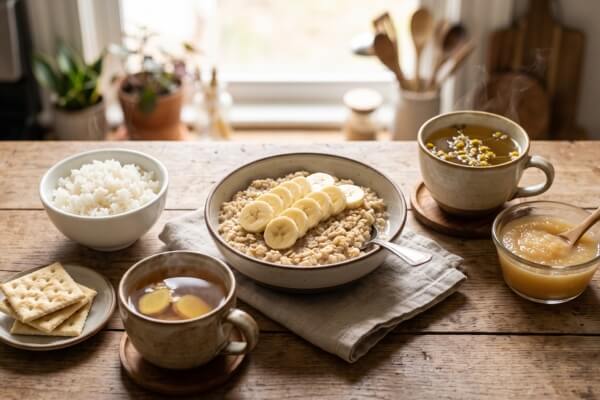
Breakfast: Plain oatmeal made with water, topped with sliced firm banana, alongside a cup of chamomile tea.
Mid-morning: A small serving of applesauce or peeled, steamed carrots.
Lunch: A small bowl of white rice with steamed, skinless chicken breast and a pinch of salt.
Afternoon: Plain crackers and a warm cup of ginger tea.
Dinner: Baked white fish (cod works well) with dairy-free mashed potatoes and steamed zucchini.
Evening: A small slice of cantaloupe. Try to stop eating at least 3 hours before lying down, since eating too close to bedtime is one of the more common triggers for nighttime reflux.
This isn't a rigid meal plan — think of it more as a template. Swap in whatever gentle foods from the lists above sound appealing to you on a given day.
Getting Back to Normal
Once your symptoms start easing up, resist the urge to jump straight back into a heavy, complicated diet. A slower, more systematic approach tends to work better:
Reintroduce one new food at a time. This makes it much easier to pinpoint exactly what's still causing trouble, rather than guessing after a big meal with five new ingredients.
Keep portions small. Even foods you tolerate well can cause problems in large quantities while you're still recovering.
Favor minimally processed foods first. Whole grains, lean proteins, and cooked vegetables should form the foundation before you start layering in richer or heavier foods.
Give your body 24 hours to respond to each newly reintroduced food before adding the next one, so you're not left wondering which of three new foods caused a reaction.
Most everyday digestive upset resolves on its own with a bit of time, good hydration, and a gentler approach to eating. But if your symptoms are dragging on, getting worse, or just don't add up, it's worth checking in with a healthcare professional to get to the bottom of what's really going on. You know your body better than anyone — trust it when it's telling you something isn't right.
Depending on the root of your sensitivity, targeted nutritional support can make daily meals much easier to navigate.