Diet After Gallbladder Removal: First Week Meal Plan
If you’ve just had your gallbladder removed, chances are food is the last thing you feel confident about right now. That’s normal. Most people go on to eat a totally normal diet again, but that first week is usually when your digestion is most sensitive, and it helps to know what to reach for.
Here’s why: your gallbladder used to store bile and release it when you ate, especially with fattier meals. Without it, bile just drips continuously into your gut instead. Your body adjusts to this over time, but in the meantime, certain foods — particularly greasy or heavy ones — are more likely to cause bloating, cramping, gas, or loose stools. To understand these symptoms, read our guide on why you have diarrhea (diarrhoea) after gallbladder removal.
Supporting your digestion is straightforward. Following clinical post-operative guidelines from surgical authorities like the American College of Surgeons (ACS) and the UK's National Health Service (NHS), the goal during the first week is to keep meals small, keep fat low, and give your system a few days before asking too much of it.
Diet After Gallbladder Removal: Why the First Week Matters
Right after surgery, it’s common to notice:
Loose stools
Bloating and gas
Mild nausea
General digestive sensitivity
Trouble handling high-fat meals
None of this means something’s wrong — it’s just your gut finding its natural balance. Smaller, lower-fat meals tend to keep symptoms manageable while that happens.
The Basic Rules for Your Post-Surgery Diet
Lean toward:
✅ Low-fat foods
✅ Smaller, more frequent meals (e.g., standardizing portions to around 3-4 oz / 85-115g of protein)
✅ Staying hydrated (aim for about 64 oz / 2 liters of water daily)
✅ Adding new foods one at a time
✅ Simple, easy-to-digest ingredients
Steer clear of:
❌ Fried food and fast food
❌ Heavy cream sauces
❌ Fatty cuts of meat
❌ Oversized portions
❌ A lot of added sugar
Gallbladder Removal Meal Plan: Day-by-Day Adaptation
Days 1–2: Keep It Bland and Gentle
Right after surgery, boring is good. Think: clear broth, plain toast, crackers, applesauce, white rice, bananas, oatmeal (porridge), plain potatoes, herbal tea, and water.
The goal here isn’t robust nutrition, really — it’s just easing your system back into working without overwhelming it.
Days 3–4: Start Adding Protein
Once you’re keeping food down comfortably, lean protein can come back into the picture: skinless chicken breast, turkey breast, egg whites, white fish, low-fat Greek yogurt, and cottage cheese. This is also when a lot of people start feeling noticeably more like themselves — protein helps with that.
Days 5–7: Build Out Real Meals
By now, most people can handle more variety. A few ideas:
Breakfast: Oatmeal with banana, egg white scramble with spinach, or low-fat yogurt with berries.
Lunch: Turkey sandwich on whole-grain bread, chicken and rice bowl, or vegetable soup with lean protein.
Dinner: Baked cod with potatoes, grilled chicken with steamed vegetables, or turkey meatballs with rice.
Snacks: Applesauce, rice cakes, banana slices, low-fat yogurt, fresh berries.
Good Foods to Eat With No Gallbladder (and What to Avoid)
A supportive diet after gallbladder removal focuses on lean proteins and soluble fiber (fibre). Introducing these elements gradually helps your digestive system adapt naturally.
Foods That Tend to Work Well This Week
Lean proteins: Chicken breast, turkey, white fish, shrimp, egg whites, tofu.
Easy carbs: Oatmeal, rice, potatoes, sweet potatoes, whole-grain toast, rice cakes.
Fruit & Veggies: Bananas, applesauce, melon, blueberries, strawberries, cooked carrots, zucchini (courgette), green beans, spinach, pumpkin.
Cooked vegetables are usually gentler on digestion than raw ones right now — save the salads for later.
Foods to Hold Off On
Everyone’s different, but these tend to cause trouble early on: fried chicken, french fries (chips), pizza, bacon, sausage, fatty beef, butter-heavy dishes, cream-based soups, ice cream, pastries, and heavily processed snacks. They’re not off-limits forever — just give your gut a break from them for now.
A Sample Day, Put Together
Breakfast: Oatmeal with banana slices
Morning snack: Low-fat yogurt
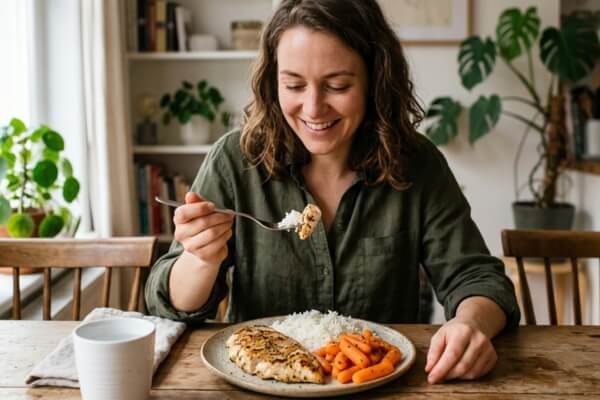
Lunch: Grilled chicken, rice, and cooked carrots
Afternoon snack: Applesauce
Dinner: Baked fish, mashed potatoes, steamed green beans
Evening snack: Rice cakes
Nothing fancy — just balanced, low-fat, and easy on your system.
A Few Things That Help Overall
Eat slowly, and don’t force a full plate if you’re not feeling it.
Drink water steadily throughout the day.
Add new foods one at a time so you know what’s causing what.
If something doesn’t sit right, jot it down — patterns show up fast.
Keep meals simple rather than trying to do too much too soon.
Small, boring choices this week tend to pay off later.
Looking Past Week One?
The first week is really just the starting line. A lot of people find the harder part is a few weeks out, when they’re trying to eat normally again, but still want meals that won’t upset their stomach.
The No Gallbladder Diet Cookbook was built for exactly that stretch — 140 low-fat recipes, a 6-week meal plan, shopping lists, and everyday meals for breakfast through dessert, all designed around life without a gallbladder.
If you’re looking past this first week, it’s a solid next step to support your digestive resilience long-term.