Low-FODMAP Grocery List for Beginners
Starting a Low-FODMAP diet can feel overwhelming. One moment you're motivated to reduce bloating and digestive discomfort, and the next you're standing in the grocery store wondering what's actually safe to eat.
The good news: it doesn't have to be complicated. By focusing on foods naturally lower in fermentable carbohydrates, you can build balanced, satisfying meals while supporting digestive comfort. This beginner-friendly guide will help you stock your kitchen with Low-FODMAP staples and make meal planning easier.
What Is a Low-FODMAP Diet for Beginners?
The Low-FODMAP diet was developed to help manage symptoms of Irritable Bowel Syndrome (IBS) and other digestive disorders. FODMAPs are specific carbohydrates that some people absorb poorly, which can contribute to:
Bloating
Abdominal pain
Excess gas
Diarrhea (diarrhoea)
Constipation
General digestive discomfort
According to dietary guidelines from the US National Institute of Diabetes and Digestive and Kidney Diseases (NIDDK), alongside the American College of Gastroenterology (ACG) and the UK's National Health Service (NHS), this approach has three phases: a short elimination period, a structured reintroduction of individual FODMAP groups, and a personalized long-term plan to help manage symptoms of Irritable Bowel Syndrome (IBS). Because tolerance varies from person to person — and because eliminating too many foods for too long can affect nutrition and gut bacteria — it's best to work with a healthcare professional or registered dietitian, especially during reintroduction.
Your Essential Low-FODMAP Grocery List
Safe FODMAP Foods: Vegetables
Commonly well tolerated in appropriate serving sizes:
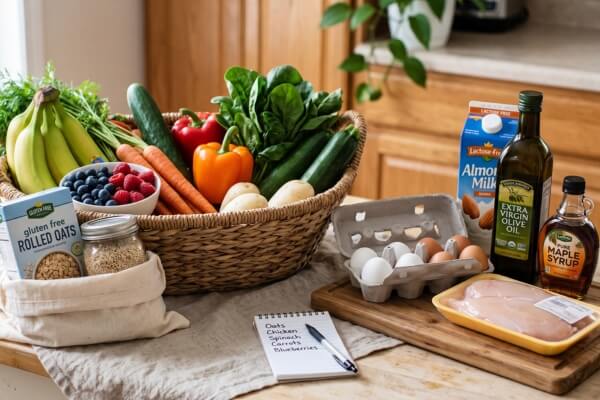
Carrots • Cucumbers • Bell peppers (sweet peppers) • Tomatoes • Zucchini (courgette) • Eggplant (aubergine) • Green beans • Spinach • Kale • Lettuce • Arugula (rocket) • Bok choy • Potatoes • Sweet potatoes • Radishes • Turnips • Pumpkin (small servings)
Shopping tip: Fresh, frozen, and many canned vegetables work well — just choose options without added onion or garlic.
Low-FODMAP Fruits
Bananas (firm, not overripe) • Blueberries • Strawberries • Raspberries • Oranges •Kiwifruit• Pineapple • Grapes • Cantaloupe (rockmelon) • Dragon fruit • Passion fruit
Shopping tip: Portion size matters more with fruit than with almost any other category. A safe portion is often limited to a small serving (approx. 2.6 oz / 75 g). Some options shift from low to high FODMAP once you go past this amount. When in doubt, check a resource like the Monash University FODMAP app for specific limits.
Low-FODMAP Protein
Most plain, unseasoned proteins are naturally Low-FODMAP in standard servings (around 3.5 oz / 100 g):
Chicken breast • Turkey • Lean beef • Pork tenderloin • Fish • Shrimp • Eggs • Firm tofu • Tempeh
Shopping tip: Watch out for marinades and seasoning blends containing onion powder, garlic powder, honey, or high-fructose sweeteners.
Low-FODMAP Dairy and Alternatives
Lactose-free milk • Lactose-free yogurt (yoghurt) • Lactose-free cottage cheese • Hard cheeses (Parmesan, cheddar, Swiss) • Almond milk • Rice milk
Always check labels for hidden ingredients like inulin or added milk solids.
Low-FODMAP Grains and Starches
Oats • Rice • Quinoa • Corn tortillas • Rice noodles • Gluten-free pasta • Polenta • Buckwheat • Millet • Rice cakes
These form the foundation of most satisfying meals on this plan.
Low-FODMAP Nuts and Seeds
Enjoy in moderate portions: Walnuts • Pecans • Macadamia nuts • Peanuts • Chia seeds • Pumpkin seeds • Sunflower seeds •Flaxseeds
Low-FODMAP Pantry Essentials
Olive oil • Avocado oil • Maple syrup • Pure sugar • Rice vinegar • Mustard • Dried herbs (basil, oregano, thyme, rosemary) • Cinnamon • Ginger • Turmeric
These staples add flavor (flavour) without relying on common triggers like onion and garlic.
Foods Commonly Limited to Manage IBS Diet
Individual tolerance varies, but many people temporarily avoid:
Onions • Garlic • Wheat-based bread • Regular milk • Soft cheeses • Apples • Pears • Mangoes • Watermelon • Honey • Beans • Lentils • Cashews • Pistachios
The Low-FODMAP diet isn't meant to be a permanent restriction — it's a short-term discovery tool to support your digestive wellness.
Sample Grocery Shopping List
Produce: Bananas, blueberries, strawberries, spinach, carrots, cucumbers, bell peppers, potatoes, zucchini, lettuce
Protein: Chicken breast, eggs, salmon, turkey, firm tofu
Dairy & Alternatives: Lactose-free milk, lactose-free yogurt, cheddar cheese
Pantry: Oats, rice, quinoa, olive oil, chia seeds, cinnamon
Tips for Successful Low-FODMAP Shopping
Read ingredient labels carefully — onion, garlic, honey, and inulin hide in unexpected places (sauces, broths, protein bars).
Keep meals simple when starting out; complexity is easier to add once you know your triggers.
Focus on what you can eat, not just what to avoid — restriction-only thinking makes the diet harder to sustain.
Plan meals before you shop, so you're not improvising in the aisle.
Stock versatile staples like oats, rice, eggs, and chicken that work across many meals.
A well-stocked kitchen makes following a Low-FODMAP lifestyle significantly easier.
Looking for More Low-FODMAP Meal Ideas?
A grocery list is a great starting point, but turning ingredients into delicious meals is where many people get stuck. The Complete Low-FODMAP Diet Cookbook includes science-based guidance, easy gut-friendly recipes, a practical 14-day meal plan, shopping lists, and recipes spanning breakfasts, lunches, dinners, snacks, and desserts.
Whether you're new to Low-FODMAP or looking for fresh inspiration, it can help simplify meal planning while supporting digestive health.