Bloating After Gallbladder Surgery: The Hidden Sugars Guide
Why Sugar Disrupts Your Post Cholecystectomy Diet
As a nutritionist, one of the most common questions I hear from clients recovering from gallbladder removal is: "I cut out all the heavy fats, so why am I still feeling so bloated and uncomfortable?"
It is completely normal to hyper-focus on dietary fats during your gallbladder removal diet. However, while managing fat intake is a crucial piece of the puzzle, another stealthy trigger often flies under the radar. Recent studies suggest that diets high in added sugars can exacerbate digestive issues for people without a gallbladder.
If you are struggling with post-surgery digestion, it might be time to shift your focus from the fat content of your meals to the hidden sugars lurking in your pantry.
The Science: What Sugar Does to Your Gut
To understand why sugar causes so much trouble, we have to look at the digestive environment post-surgery. Without a gallbladder to store and concentrate bile, your liver continuously releases a less concentrated trickle of bile directly into your intestines. This changes the dynamics of your digestion, making your gut highly sensitive to what you put inside it.
High amounts of refined carbohydrates can disrupt the delicate ecosystem of your intestines, complicating your gallbladder removal diet. Excess sugar can alter the gut microbiota, contribute to inflammation, and worsen symptoms such as bloating and irregular bowel movements. If you struggle with this, exploring targeted post-cholecystectomy wellness habits can help soothe your daily digestion. Essentially, rapid-digesting sugars act as fast food for the less desirable bacteria in your gut. As these bacteria feed on the sugar, they undergo fermentation, producing excess gas that leads to bloating and discomfort you are trying to avoid.
Furthermore, heavy sugar intake can trigger digestive stress. Instead, prioritize nutrient-dense whole foods to help ease bloating and support your recovery. When your gut lining is inflamed, it becomes far more reactive and much less efficient at adapting to your new, continuous flow of bile.
Beware of the "Health Food" Traps
When we talk about cutting out sugar, most of us know exactly what to look for. We need to avoid sugary beverages, such as soda and sweetened coffee drinks. We should also limit high-sugar desserts, like cakes, cookies, and candy.
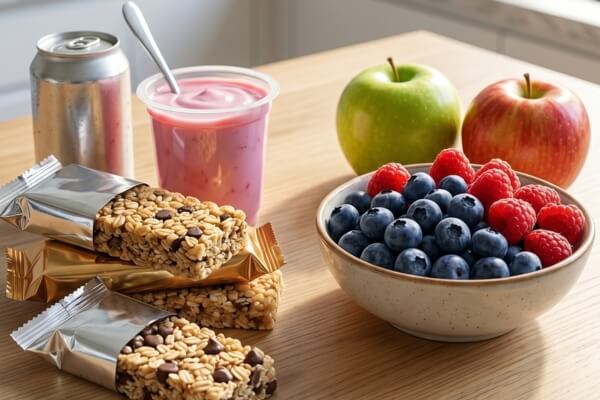
However, the real danger often lies in the foods we mistakenly believe are good for us. In the modern grocery store, you must constantly watch out for packaged foods with hidden sugars, including flavored yogurts (yoghurts) and granola bars. Many of these "health" products contain just as much added sugar as a candy (sweets) bar. When you eat a heavily sweetened granola bar thinking you are doing your digestion a favor, you are actually triggering the very inflammation and microbiome imbalances that cause post-meal distress.
How to Satisfy Your Sweet Tooth Naturally
Supporting your digestion doesn't mean you have to banish sweetness from your life entirely. Your body needs sweetness delivered in a package it can safely process.
To satisfy cravings, focus on naturally sweet, low-fructose fruits. Limiting added sugars helps prevent bacterial overgrowth and supports steady digestion. Whole fruits contain natural sugars, but they are bundled with dietary fiber (fibre) and water. This fiber (fibre) slows down digestion, managing rapid fermentation and gas buildup that refined sugars can cause. It also acts as a prebiotic, nourishing the beneficial bacteria in your gut and promoting microbial balance.
The Takeaway for Gallbladder Health
Navigating a post-gallbladder surgery diet is a journey of re-learning how your body responds to food. If you've successfully moderated your fat intake but are still dealing with unpredictable bowels and stubborn bloating, take a closer look at your sugar consumption. By swapping ultra-processed, sugary snacks for fresh, whole fruits, you can actively soothe your digestion, support the microbiome, and regain daily comfort.
Ready to take the guesswork out of eating after surgery? If you are looking for a structured, science-backed way to navigate these dietary changes, my book, the No Gallbladder Diet Cookbook: 140 Easy & Delicious Low-Fat Recipes for Better Digestion and Long-Term Wellness, is designed exactly for this purpose. It includes a complete 6-Week Meal Plan and Shopping List to help you gradually reintroduce healthy foods, manage your symptoms, and thrive without a gallbladder.