
Eating Fat After Gallbladder Removal: Post-Cholecystectomy Diet Guide
If you have recently had your gallbladder removed, you might be staring at your plate with a sense of dread. One of the most common fears post-surgery is the belief that dietary fats are permanently off the menu. Let's break down the science, separate myth from fact, and explore how your digestive system actually adapts.
The Myth: Why You Don't Need to Avoid Fats Forever
It is a widespread misconception that complete fat avoidance is necessary after surgery. Because the gallbladder's primary role was to store and concentrate bile—a digestive fluid that acts as a critical emulsifier of fats—many assume that its absence makes fat digestion impossible.
The Fact: Fats Are Essential for Long-Term Health
The truth is that fats are essential for health, providing energy, supporting cell function, and aiding in nutrient absorption. Specifically, bile plays a critical role in absorbing fat-soluble vitamins, including A, D, E, and K. Without a gallbladder, your body may need time to adjust to digesting fats efficiently, but complete avoidance is unnecessary and can lead to nutrient deficiencies over time.
The Science: How Your Body Adapts
After a cholecystectomy (gallbladder removal), your liver continuously produces bile. Incorporating nutrient-dense foods, like soluble fiber (fibre), helps optimize digestion. As a registered dietitian specializing in gastrointestinal health, I recommend starting with small, frequent portions to support your gallbladder removal recovery. However, without the gallbladder to store and concentrate it, the bile entering your intestines is less concentrated and flows steadily, regardless of whether you are eating. This continuous flow can initially make fat digestion less efficient, occasionally leading to bloating, gas, or fatty stools; learning how to manage post-surgery bloating can help you navigate this phase comfortably.
But the human body is remarkably adaptable. Over time, the small intestine becomes more efficient at adapting to the continuous flow of bile, thereby improving the absorption of dietary fats. Research published in The World Journal of Gastroenterology (2023) indicates that patients who consume moderate amounts of healthy fats experience improved nutrient absorption without worsening their digestive symptoms.
The Post Cholecystectomy Diet Roadmap
Support from surgery requires a structured, gradual approach rather than a lifetime of restriction. Following a structured gallbladder surgery diet timeline helps safely reintroduce fats back into your meals:
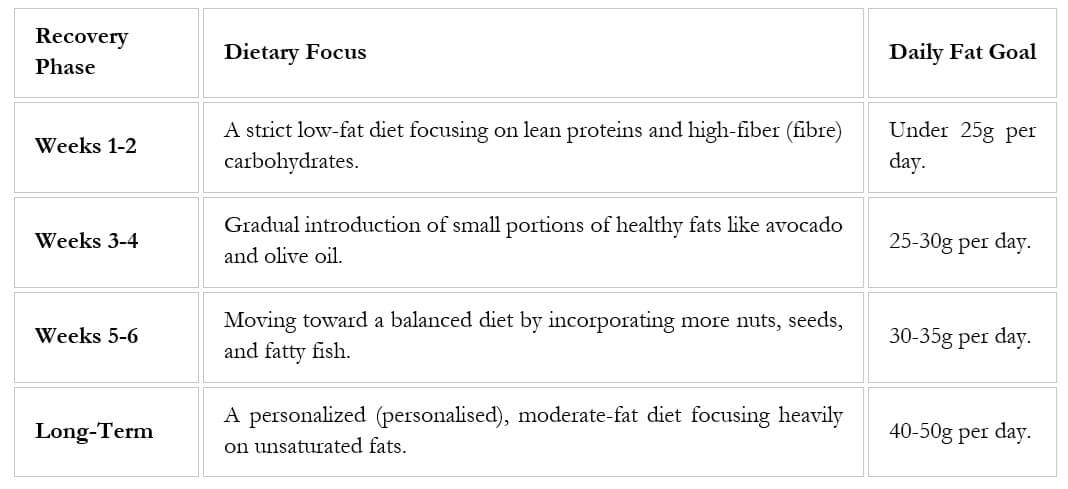
Not sure how to translate these daily fat goals into actual meals? The No Gallbladder Diet Cookbook on Amazon includes a complete meal plan and delicious recipes specifically tailored for every stage of your post-surgery recovery.
Focus on Fat Quality
When reintroducing fats, the quality of the fat matters immensely. Saturated fats and trans fats—found in deep-fried foods, heavily processed items, and full-fat dairy—should be minimized, as they can trigger indigestion and diarrhea (diarrhoea). Instead, focus your plate on healthy fats without a gallbladder—like olive oil, nuts, and avocados—which are generally well-tolerated. Instead, focus your plate on healthy monounsaturated fats from sources like olive oil, nuts, avocados, and fatty fish, which are generally well tolerated and provide essential nutrients.
Life after gallbladder removal is less about strict dietary rules and more about cultivating a balanced, healthy lifestyle. With gradual adjustments and a little attention to how your body reacts, you can confidently enjoy a wide range of delicious meals to support daily digestion and maintain optimal health.