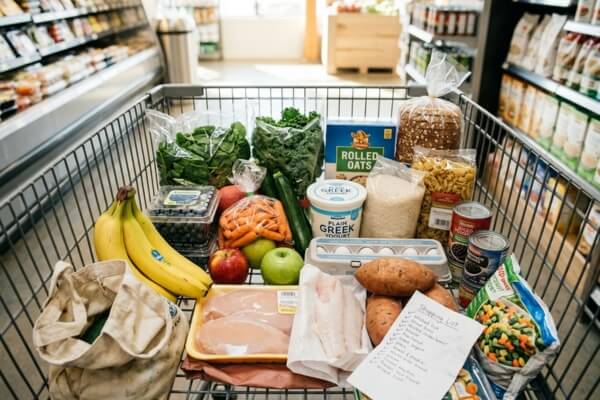
Post-Gallbladder Diet: A Smart Gallbladder Removal Shopping List
The first grocery trip after gallbladder surgery tends to be strange. You're standing in an aisle you've walked down a thousand times, holding something you've eaten your whole life, genuinely unsure.
Most of that uncertainty resolves within a few months. And the answer is usually less restrictive than people are told — which is the part most articles on this topic get wrong.
What Actually Changed After Surgery
The gallbladder was a storage tank. The liver makes bile continuously; the gallbladder held it, concentrated it, and released a large dose when a fatty meal arrived.
Without it, the liver still makes bile — it just trickles into the small intestine steadily rather than arriving on demand. For most people, the bile duct gradually adapts. That's why a large, fatty meal can be uncomfortable in the early weeks: there's no concentrated burst of bile waiting to meet it.
Notice what that mechanism implies. The issue is less how much fat you eat in a dayand morehow much arrives at once. Spreading fat across meals tends to work better than eliminating it.
The Truth About Low-Fat Diet Myths
Almost everyone is told to eat strictly low-fat after this surgery—which is often tied to common digestive health myths. The evidence behind that advice is thinner than the confidence with which it's usually delivered.
A prospective study of 83 patients tracked digestive quality of life before surgery, at one month, and at six months, sorting people into four groups by fat intake. Quality of life improved significantly after surgery regardless of how much fat people ate. A separate randomized study found no significant effect of a low-fat diet on supporting digestive wellness.
It isn't unanimous. Two other studies reported more symptoms in people who weren't following a low-fat diet, and a Korean study found that at three months, symptoms were associated with higher intake of animal protein, cholesterol, and eggs — and lower intake of vegetables. So the picture is mixed rather than settled. A randomized trial comparing a fat-free diet against a balanced WHO diet in 242 patients is running now, which should clarify things.
What's reasonably clear is that indefinite fat restriction isn't well supported, and it carries real costs: fat-soluble vitamin absorption, satiety, food enjoyment, and the mental load of treating every meal as a risk assessment.
That same study also found something useful for setting expectations: more than half of patients had some change in bowel habit after surgery, still present at six months in 23%. Some adjustment is normal. Persistent daily diarrhea is a different matter — more on that below.
So the cart described here isn't a low-fat cart. It's built around vegetables, fat spread across the day, and food that can be assembled on a low-energy evening.
Building Your Gallbladder Removal Shopping List
Produce (The Foundation)
Bananas, peeled apples, pears, grapes, and other easy-to-digest foods. Carrots, cucumbers, zucchini (courgette), green beans, lettuce, spinach. Sweet potatoes and regular potatoes (jacket potatoes).
Vegetables were the one dietary factor that showed up as protective in the Korean symptom data — a nice change from lists of things to avoid. Frozen counts. Frozen vegetables and fruit lose essentially nothing nutritionally and remove the spoilage pressure that makes fresh produce stressful to buy in quantity.
Lean Proteins
Skinless chicken breast, turkey breast, extra-lean ground turkey. White fish. Tuna in water. Eggs. Cottage cheese and Greek yogurt.
Leaner cuts are a sensible default, though not out of fear — they're simply easier to build a meal around without much added fat. One note on eggs: they were among the foods associated with symptoms in that Korean study at three months. If you're recently post-op and eggs sit badly, it's better to rely on what to eat when your stomach is upset rather than pushing through. If they're fine, they're fine.
Grains and Starches
Oatmeal, brown rice, white rice, whole grain bread, sourdough, whole wheat tortillas, pasta, quinoa, rice cakes.
Oats deserve a specific mention. Soluble fiber (fibre) binds bile acids in the gut — the same broad mechanism as the medication used for post-surgical bile acid diarrhea (diarrhoea). That doesn't make oatmeal a substitute for treatment if you need it, but it isn't a random inclusion either.
Pantry Staples
Canned beans, lentils, canned tomatoes, low-sodium broth (stock), oats, crackers, applesauce (apple purée), peanut butter powder, mild salsa, and a generous spice shelf.
Peanut butter powder is the genuine find here — peanut flavor in oatmeal or a smoothie without a concentrated load of fat in one sitting. And spices matter more than they sound like they should, because the fastest route to a diet that fails is bland food eaten out of obligation.
Dairy and Alternatives
Greek yogurt, low-fat milk, unsweetened soy or oat milk, cottage cheese, and real cheese in modest amounts.
Tolerance varies enormously here, and it's worth testing rather than assuming. Reduced-fat cheese works for some people; for others a smaller portion of the real thing works just as well and tastes considerably better.
Energy-Saving Shortcuts
Pre-washed greens, frozen vegetables and fruit, microwave rice, rotisserie chicken, low-fat soups, plain instant oatmeal.
The cooking that actually happens beats the cooking that theoretically should. That's true in general, and especially true in the weeks after surgery when energy is low.
Foods to Buy Less Often
Fried food, heavy cream sauces, high-fat processed meats, large pastries, extra-cheesy frozen meals, rich desserts.
Less often, not never. Portion and timing appear to matter more than the food itself — a small portion of something rich alongside other food behaves differently from the same thing eaten alone in quantity.
When Shopping Isn't the Answer: Bile Acid Diarrhea
This is the section that matters most, and it's the reason this article shouldn't be read as "manage it with groceries."
If you have persistent watery diarrhea (diarrhoea) after gallbladder surgery, there's a strong chance it isn't about what you're eating. A meta-analysis of patients with chronic watery diarrhea (diarrhoea) after cholecystectomy—aligning with observations from the American College of Gastroenterology (ACG), alongside the UK's National Health Service (NHS) and the European Society of Neurogastroenterology—found roughly 70% had bile acid diarrhea— bile acids reaching the colon in quantities it can't handle, drawing in water.
It has a specific treatment. Bile acid sequestrants — cholestyramine, colestipol, colesevelam — bind bile acids in the gut, and response rates in chronic diarrhea with bile acid malabsorption are high. There's a specific test (SeHCAT), and in many cases doctors will simply trial the medication.
The reason this is worth knowing: it gets missed constantly. Bile acid diarrhea is frequently misdiagnosed as diarrhea-predominant IBS, with diagnostic delays often exceeding five years. One multicentre audit found that only a small proportion of post-cholecystectomy patients with diarrhea were investigated at all, with a median of 672 days between surgery and testing.
Nearly two years, for a condition whose treatment often works within days.
If you're eating ever more carefully and still running to the bathroom, ask your doctor directly about bile acid diarrhea. That one sentence is worth more than any shopping list.
See a doctor promptly for severe or persistent abdominal pain, fever, jaundice (yellowing of the skin or eyes), pale stools, or dark urine. Those can indicate a retained stone or a bile duct problem, and they are not dietary issues.
The bottom line
A sustainable post-gallbladder diet relies on ordinary groceries (supermarket staples): vegetables, fruit, lean protein, grains, beans, a few shortcuts. No specialty products, no expensive supplements, nothing requiring a health food store.
What changes isn't really the contents. It's the shift from asking Is this food safe? to asking how much fat is arriving in this one meal, and what else is arriving with it? That question has an easier answer, and it doesn't quietly shrink your diet year after year.
And if careful eating isn't fixing it — that's information, not failure. It means the problem probably isn't the food.
For a complete foundational protocol, review our Holistic Digestive Wellness Guide to ensure your daily routine supports long-term balance.
References
Blasco Y, et al. Low-fat Diet After Cholecystectomy: Should It Be Systematically Recommended? Cirugía Española. 2020;98(1):36–42.
de Menezes HL, et al. Randomized study for assessment of hypolipidic diet in digestive symptoms immediately following laparoscopic cholecystectomy. Revista do Colégio Brasileiro de Cirurgiões. 2013;40(3):203–207.
Shin Y, et al. Association between dietary intake and postlaparoscopic cholecystectomic symptoms in patients with gallbladder disease.Korean Journal of Internal Medicine. 2018;33(4):829–836.
Ruiz-Campos L, et al. Systematic review with meta-analysis: the prevalence of bile acid malabsorption and response to colestyramine in patients with chronic watery diarrhoea and previous cholecystectomy. Alimentary Pharmacology & Therapeutics. 2019;49(3):242–250.
Farrugia A, et al. Rates of Bile Acid Diarrhoea After Cholecystectomy: A Multicentre Audit. World Journal of Surgery. 2021.
Sadowski DC, et al. Canadian Association of Gastroenterology Clinical Practice Guideline on the Management of Bile Acid Diarrhea. Journal of the Canadian Association of Gastroenterology. 2020;3(1):e10–e27.
RADIGAL: A Randomized Controlled Trial Comparing Fat-free Versus Balanced (WHO) Diet in Gallstone Disease. ClinicalTrials.gov NCT06405906.
Custom HTML/CSS/JavaScript