Heartburn Triggers: Why Healthy Smoothies Cause Reflux
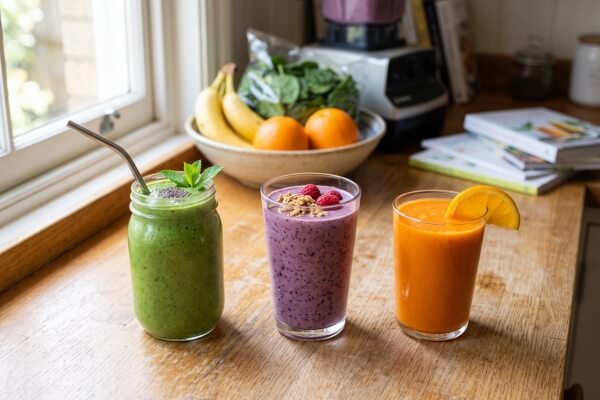
A smoothie looks like the ideal reflux-friendly meal on paper: fresh fruit, yogurt, greens, seeds, maybe a spoonful of nut butter, all blended into one convenient drink.
And yet some people still end up with a burning chest, a sour taste creeping up their throat, belching, or an uncomfortably full feeling shortly after finishing one. That doesn't mean smoothies are secretly unhealthy. More often, it's a handful of factors — volume, ingredients, how fast you drink it, and timing — stacking together to make reflux more likely.
Reflux happens when stomach contents move back up into the esophagus. When that starts happening often enough, or causes real complications, it gets classified as GERD (Gastroesophageal Reflux Disease / GORD). The underlying problem is rarely just "there's acid in the stomach" — it's really about the barrier between your stomach and esophagus (oesophagus), how much pressure is building up inside your stomach, how well your esophagus clears itself afterward, and how sensitive your particular system is.
Why "Healthy" Ingredients Become Heartburn Triggers
Smoothies genuinely can deliver fruit, vegetables, fiber (fibre), protein, and a solid dose of micronutrients. They can also, without much effort, turn into something surprisingly large, acidic, fatty, or concentrated.
A fairly typical recipe might include:
Orange juice
Pineapple
Berries
Flavored (flavoured) yogurt (yoghurt)
Whole milk or coconut milk
Nut butter
Chocolate protein powder
Mint
Honey
Several cups of fruit
Every single one of those sounds reasonable in isolation. Blended together, though, they can become a meal that quietly stacks several classic reflux triggers on top of each other.
Worth knowing upfront: reflux triggers are highly individual. Current clinical guidance leans toward cutting back on whatever consistently triggers your symptoms specifically, rather than automatically eliminating all foods to avoid with acid reflux — the evidence behind many of those blanket restrictions is genuinely thinner and more inconsistent than the old advice implied.
1. The Smoothie May Simply Be Too Large
Meal volume is one of the most overlooked explanations for smoothie-triggered heartburn.
A tall smoothie can easily run 16, 20, or even 24 fluid ounces (470, 590, or 710 ml). Because it's something you drink rather than something you chew, it often doesn't feel as substantial as a plated meal — even though it can fill and stretch your stomach just as quickly, if not faster.
In a small controlled study of people with GERD, drinking 600-milliliter (20 fl oz) liquid meals led to more reflux episodes and greater acid exposure than the exact same total daily intake split into 300-milliliter (10 fl oz) portions. The larger meals also caused noticeably more stomach distension.
That distension matters more than it might seem. A stretched stomach can trigger temporary relaxations of the lower esophageal sphincter — the muscular valve that's supposed to keep stomach contents from traveling back up. Those temporary relaxations are actually one of the main pathways through which post-meal reflux happens in the first place.
Try this instead: Use a smaller glass, and resist treating an oversized smoothie as something to drink alongside a full breakfast rather than in place of one. A modest smoothie built from the exact same ingredients tends to sit much easier than a giant one.
2. You May Be Drinking It Too Quickly
Smoothies have a habit of getting consumed on the go — on the way to work, right after a workout, while you're doing three other things at once. A drink carrying several hundred calories can disappear in under five minutes without much thought.
In a controlled study of healthy adults, eating an identical meal in five minutes led to more post-meal reflux episodes than eating the same meal over 30 minutes, with the difference showing up most clearly in the first hour afterward. That particular study used a standard solid meal rather than a smoothie specifically, but the underlying point still applies: loading your stomach quickly seems to invite more reflux than getting there gradually.
Try this instead: Sip rather than gulp. Pause halfway through and actually check in with whether you're already comfortably full before finishing the rest.
3. Citrus and Pineapple Can Be Genuinely Irritating
Oranges, lemons, grapefruit, pineapple, and other tart fruits show up constantly in "cleansing" or immune-supporting smoothie recipes.
Here's a nuance worth knowing: acidic foods don't necessarily weaken the lower esophageal sphincter or trigger reflux for everyone. The American College of Gastroenterology, aligning with broader digestive wellness observations from the UK's NHS, notes that lab studies have found little to no effect of citrus on sphincter pressure itself. What acidic foods can do, though, is aggravate the burning sensation once reflux has already irritated your esophagus, making it harder to soothe esophagus (oesophagus) tissues naturally — it's more about local irritation than about causing the reflux event in the first place.
That said, citrus and tomatoes are still commonly linked with GERD symptoms in practice, and the sensible approach is simply paying attention to your own reaction rather than assuming it applies universally.
Try this instead: Swap orange or pineapple juice for water, unsweetened oat milk, unsweetened soy milk, a lactose-free milk you tolerate well, or a small amount of plain yogurt blended with water. Lean on milder fruits — banana, melon, pear, or blueberries — when they sit better for you.
4. Fruit Juice Adds Both Acidity and Volume
A lot of smoothie recipes lean on juice as the main liquid base. It sweetens the drink and thins it out, but it also quietly increases both the acidity and the total volume, without giving you the fullness that whole fruit would provide for the same amount of sugar.
Juice isn't a universal trigger, for what it's worth — observational research cited in the ACG guideline didn't find juice consistently linked to increased reflux across the general population. Individual responses still vary quite a bit here, particularly with citrus-based juices specifically.
The more useful question isn't "is juice bad," but whether you specifically tend to develop symptoms after a smoothie built around a big pour of orange, grapefruit, or pineapple juice.
Try this instead: Build flavor from whole fruit and use an unsweetened, non-acidic liquid for blending instead. This has the added benefit of making the drink's overall size much easier to control.
5. Healthy Fats Can Add Up Fast
Fat isn't the enemy here — nuts, seeds, avocado, and unsaturated oils all belong in a genuinely nutritious diet. But a smoothie that combines full-fat yogurt, coconut milk, peanut butter, chia seeds, flaxseed, and avocado can quietly become a high-fat meal in disguise.
The research on fat and GERD specifically is a bit mixed: some controlled studies find more acid exposure after high-fat meals, while others find little real difference once calories and meal volume are properly matched. Current guidelines treat fat reduction as something to try individually, rather than a guaranteed fix that works the same way for everyone.
There's also a simpler mechanical issue: piling on multiple fat sources makes a smoothie more calorie-dense, which can nudge the whole thing into being a bigger meal than you actually meant to make.
Try this instead: Pick one main fat source rather than stacking several — a tablespoon of nut butter, a small portion of avocado, a tablespoon of chia or ground flaxseed, or a modest serving of plain yogurt. More isn't automatically better here.
6. Coconut-Based Smoothies May Be Heavier Than You'd Guess
Coconut milk and coconut cream are popular dairy-free smoothie staples, and the full-fat canned versions in particular can make a drink genuinely rich.
If your reflux tends to flare after fatty meals specifically, a smoothie built from coconut cream, nut butter, and seeds together may be considerably harder to tolerate than one made with a lighter, unsweetened milk. That doesn't mean coconut is off-limits forever — it just means the form and the amount both matter more than people usually assume.
Try this instead: Reach for a refrigerated coconut beverage rather than canned coconut cream, or dilute a small amount of full-fat coconut milk with water to stretch it further.
7. Chocolate, Coffee, and Mint Can Turn a Smoothie Into a Trigger Combination
Some smoothie ingredients don't immediately register as reflux-related, but genuinely can be:
Cocoa or chocolate protein powder
Cold-brew coffee
Espresso
Peppermint extract
Fresh mint
Caffeinated matcha or tea concentrates
Chocolate, peppermint, caffeinated drinks, and coffee are all commonly reported triggers, even though the underlying lab and symptom evidence isn't perfectly consistent — which is exactly why complete avoidance isn't necessary for everyone. Still, reducing individually troublesome ingredients is a reasonable strategy according to current ACG guidance.
A coffee-chocolate smoothie can be especially rough when it's also large, high in fat, and gone in under five minutes.
Try this instead: Test one suspected ingredient at a time. Don't pull coffee, cocoa, mint, citrus, and dairy all at once unless a clinician specifically advises it — otherwise, you'll likely never figure out which one actually mattered.
8. The Smoothie May Be Part of a Bigger Meal Than You Realize
Sometimes the smoothie isn't breakfast — it's an addition to breakfast. For example:
Smoothie
Eggs
Avocado toast
Coffee
Supplements
A large glass of water
Every individual item here is nutritious. Added together, though, the total volume can be substantial. Reflux often responds to the overall size of a meal, not just whether one specific ingredient happens to show up on a trigger-food list somewhere. Eating smaller meals overall is a reasonable lifestyle strategy, even though the evidence behind it is less robust than the evidence supporting medical treatment once GERD (GORD) is actually diagnosed.
Try this instead: Decide upfront whether the smoothie is the whole meal, a small part of a larger one, or just a snack — and size it accordingly.
9. Timing Can Matter as Much as What's In It
A smoothie that causes zero problems at noon can absolutely trigger heartburn when you drink it late in the evening.
Both the US National Institute of Diabetes and Digestive and Kidney Diseases (NIDDK) and the American College of Gastroenterology (ACG), alongside the UK's National Health Service (NHS), advise avoiding meals within roughly two to three hours of lying down or heading to bed if nighttime reflux is an issue. Gravity does real work keeping stomach contents down while you're upright — lying flat shortly after a large drink takes that advantage away entirely.
Heartburn also tends to show up more noticeably right after drinking a smoothie and then immediately bending forward, doing ab exercises, lifting something heavy, sinking into the couch, or heading to bed.
Try this instead: Keep at least a two- to three-hour gap between a substantial smoothie and bedtime, and stay upright for a while after drinking one.
10. The Smoothie May Not Actually Be the Root Cause
Burning in your chest or throat after a smoothie doesn't automatically mean one specific fruit is to blame. Similar symptoms can come from:
Established GERD (GORD)
Reflux hypersensitivity
Functional heartburn
Swallowing problems
Delayed stomach emptying
Medication side effects
A hiatal hernia
Another underlying gastrointestinal condition
Current ACG guidance recommends looking into other medical explanations when symptoms persist despite reasonable reflux treatment. Outside of clinical interventions, this dynamic illustrates why strict acid reflux diets fail—relying solely on eliminating food after food without adopting holistic daily habits rarely supports long-term digestive wellness.
How to Build GERD (GORD) Smoothie Recipes
There's no single recipe that works for everyone, but a simple formula makes troubleshooting a lot easier.
Start with a modest volume. Aim for a normal meal or snack portion, not an oversized blender jar's worth.
Choose one mild fruit. Banana, pear, melon, blueberries, or strawberries if you tolerate them well.
Use an unsweetened base. Water, oat milk, soy milk, lactose-free milk, or whatever else you personally tolerate.
Add a moderate protein source. Plain low-fat yogurt, unsweetened soy yogurt, silken tofu, or a simple protein powder without chocolate, mint, caffeine, or heavy sugar alcohol content.
Add just one concentrated extra. Ground flaxseed, chia seeds, oats, nut butter, or avocado — pick one, not several. This is what keeps the drink from quietly ballooning into something much bigger and heavier than intended.
A Simple Example
Blend together:
½ to 1 banana
½ cup blueberries
¾ cup unsweetened oat or soy milk
½ cup plain low-fat yogurt or unsweetened soy yogurt
1 tablespoon ground flaxseed
Water as needed
Drink it slowly, and keep the serving moderate. This isn't a guaranteed symptom-free recipe — nothing is — but it's meaningfully lower in acidity and far less overloaded than a smoothie combining citrus juice, pineapple, coconut cream, chocolate, and nut butter all in one glass.
Practical Resources for Daily Digestive Support
Want to take the guesswork out of your morning routine? Discover more flavor-packed (flavour-packed), low-acid recipes designed to support your daily digestive wellness:
How to Identify Your Own Personal Trigger
The most reliable approach is a simple, structured experiment rather than guesswork.
For a few days, make a small smoothie using only a handful of ingredients you already tolerate well. If your symptoms stay under control, start adding one potentially troublesome ingredient at a time:
Start with banana, oat milk, and plain yogurt
Testberries
Test nut butter
Test citrus
Test coffee or cocoa, separately from each other
Keep track of the serving size, time of day, how fast you drank it, and whether you lay down afterward. This tells you far more than simply deciding all fruit, or all smoothies, are the problem.
When Heartburn Needs Medical Evaluation
Occasional, mild heartburn usually responds fine to meal adjustments. It's worth seeking medical advice when symptoms are frequent, getting worse, or interfering with sleep or eating.
Prompt evaluation matters especially if you notice:
Difficulty or pain when swallowing
Food feels like it's stuck
Unintentional weight loss
Vomiting
Gastrointestinal bleeding or black stools
Anemia
Persistent chest pain
Symptoms that don't improve with reasonable treatment
Current ACG guidance recommends endoscopy as the first step for anyone with swallowing difficulty, GI bleeding, weight loss, or other alarm symptoms. Chest pain deserves prompt evaluation too, since heart-related pain can genuinely mimic reflux.
For comprehensive meal strategies, explore our Holistic Reflux Support Guide to maintain long-term digestive balance.
The Bottom Line
Healthy smoothies really can trigger heartburn — but the fruit itself is rarely the whole story. A smoothie tends to cause trouble when it's too large, consumed too fast, highly acidic, rich in fat, combined with coffee or chocolate or mint, tacked onto an already substantial meal, or finished right before lying down.
Rather than giving up smoothies altogether, the more useful move is simplifying the recipe, trimming the portion, drinking it slowly, and testing suspected ingredients one at a time. A smoothie can absolutely still fit into a reflux-conscious diet — the goal was never to build the single most nutrient-dense blender creation possible. It's to make a drink your digestive system can actually handle comfortably.
This article is intended for general information and isn't a substitute for advice from your doctor, especially if reflux symptoms are frequent, severe, or don't improve with dietary changes.