Acid Reflux Diet: Why Strict Restrictions Fail
If you've ever dealt with acid reflux or GERD (commonly known as GORD in the UK and Europe), you probably know the drill. Your doctor hands you a depressing printout of things you can no longer eat. Coffee? Gone. Tomatoes? Nope. Spicy food, citrus, and chocolate? Absolutely not.
It makes sense in theory. But what happens when you follow all the rules, cut out everything you love, and still wake up with heartburn?
It's incredibly frustrating, but there's a biological reason this happens. Blanket restriction diets usually don't work long-term. Let's explore why your digestive system might rebel against strict rules and what you can do instead to support your digestive comfort.
Why the "Do Not Eat" List Backfires for Gut Health
Acid reflux happens when the lower esophageal sphincter (LES)—the little valve between your stomach and your esophagus—gets weak or relaxes when it shouldn't. Acid splashes up, and you get that familiar burning chest pain.
According to broad digestive wellness guidelines from the US National Institute of Diabetes and Digestive and Kidney Diseases (NIDDK) and the UK's National Institute for Health and Care Excellence (NICE), identifying personal food triggers is often more effective for an acid reflux diet than generic restrictions.
While it's true that certain foods can trigger that valve to relax, cutting out huge swaths of your diet usually backfires. Here's why:
You're stressing yourself out. Food fear is real. When you're constantly analyzing every bite to avoid a flare-up, your nervous system stays in a low-grade "fight or flight" mode. High stress and elevated cortisol physically slow down your digestion and make your gut highly sensitive. You might be eating the "safest" food on earth, but if you're stressed while eating it, your body won't process it well. Furthermore, this chronic metabolic stress can drain your daily energy, creating a frustrating cycle; learning how to prevent an afternoon energy crash can support your overall resilience.
Your digestion actually slows down. When people blindly eliminate foods, they often end up cutting out lots of fiber (fibre) and complex carbs by accident. Fiber (fibre) keeps things moving. When food sits in your stomach for too long, it ferments. That creates gas, which pushes upward, forces that valve open, and causes—you guessed it—reflux.
Identifying hidden food triggers is highly personal. Much like other common digestive health myths, the biggest flaw of a standard acid reflux diet is assuming everyone's body reacts the same way. Peppermint might cause terrible heartburn for your best friend, but it might not bother you at all. Forcing yourself to avoid a massive list of foods you actually tolerate leaves you malnourished and miserable.
What to Do Instead
So, if living off plain oatmeal (porridge) and boiled chicken isn't the answer, what is? Instead of living in fear of food, try shifting to an investigative approach to determine what to eat when your stomach is upset.
1. Test instead of eliminating forever.
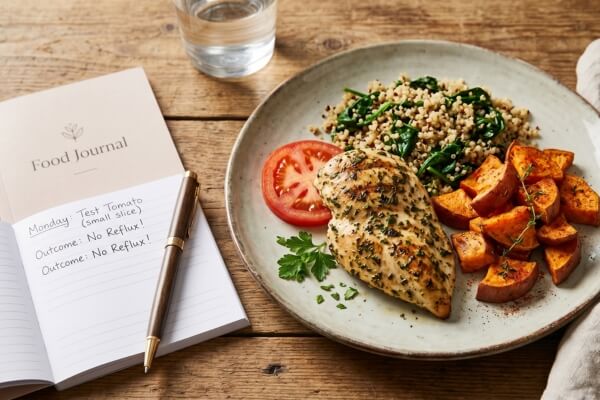
Rather than swearing off twenty different foods for the rest of your life, try systematically testing them. Start with a baseline diet of foods you know feel good in your body (like lean proteins, root veggies, and simple grains). Then, introduce one potential trigger food every few days. Have half a cup of coffee. Eat a slice of tomato. Watch how your body reacts over the next 48 hours.
If you want to optimize your meals without irritating your stomach, utilizing a 15-minute cold meal prep routine helps keep your energy high and your digestion calm.
Most people find they only have two or three actual triggers, not twenty.
2. Pay attention to gastric pressure.
Sometimes it's not what you're eating, but how you're eating. To keep pressure off that esophageal valve, you need your stomach to empty efficiently.
Chew your food until it's practically liquid. Digestion starts in your mouth. The more you chew, the less mechanical work your stomach has to do.
Could you watch your portion sizes? A massive meal stretches your stomach wall, which literally pushes against the LES valve. Four or five smaller meals feel much better than three huge ones.
Lean heavily on protein. Interestingly, clinical studies show that dietary protein can actually increase the resting pressure of the LES, helping that valve stay tightly closed.
3. Check your eating hygiene.
Your stomach can't digest properly if your brain is distracted or stressed. Before you take your first bite, force yourself to engage your parasympathetic nervous system (your "rest and digest" mode).
Put your phone away. Take three slow, deep breaths into your belly. Sit up straight. Simply being relaxed and present during a meal encourages better stomach acid production and faster digestion.
Reclaim Your Plate
Dealing with occasional acid reflux shouldn't mean a life sentence of bland food. By moving away from hyper-restrictive lists and focusing on mindful eating and personalized GERD nutrition, you can ditch food anxiety and support long-term digestive comfort.