15-Minute Family Meals: Essential Pantry Staples List
What if getting dinner on the table didn't mean a last-minute grocery run, an hour of chopping, or another takeout order?
Faster family meals rarely come down to cooking skill or elaborate meal plans. They come down to having the right ingredients in the cupboard when you need them.
With a well-stocked pantry, a handful of everyday staples becomes a dinner, a packed lunch, or a breakfast in about 15 minutes. Add a few fresh or frozen ingredients and you can feed the whole family without starting from zero every evening. Everything on this list is sold in an ordinary supermarket. Nothing here requires a specialty shop.
Before you stock up: four safety rules for family kitchens
These apply to several of the staples and meals below, so they come first.
Cooked rice has its own rule. Cool leftover rice quickly, ideally within an hour, then refrigerate it and eat it within 24 hours. Reheat it only once, until steaming hot all the way through. Freeze any rice you want to keep longer.[1] While the US Department of Agriculture (USDA) indicates a general three-to-four-day window for leftovers [2], the UK Food Standards Agency (FSA) and National Health Service (NHS) provide stricter 24-hour limits specifically for rice to support optimal digestive wellness. When you're feeding children, follow the stricter rule.
Prepare food to match young children's chewing. Don't give whole nuts to children under five. Never serve nut butter by the spoonful or in thick globs. Grind or avoid whole seeds.[3][4] US guidance puts the highest-risk age at under four; UK guidance extends the whole-nut rule to under five.
Buy canned light tuna rather than albacore for children and anyone who is pregnant or breastfeeding, and rotate in canned salmon or sardines.[5]
Check labels for allergens. Several staples here contain common allergens: wheat (pasta, couscous, crackers, tortillas), fish, milk, eggs, peanuts and tree nuts, sesame (hummus), soy (soy sauce), mustard, and celery (often in stock cubes).
Why a well-stocked pantry makes 15-minute family meals easier
A stocked pantry is your backup plan for creating 15-minute family meals on busy days. With versatile ingredients on hand, you get:
Faster meals. Many staples need little or no preparation.
Less waste. Shelf-stable ingredients fill the gap when fresh produce runs out.
Lower grocery bills. You build meals around what you have instead of buying ingredients for a single recipe.
Less mealtime stress. A few reliable staples cover you when plans change.
Easier balanced meals. A whole grain, a protein, a vegetable, and a little healthy fat make a complete plate.
The goal isn't to stock every ingredient imaginable. It's to choose foods that work together in many combinations.
20 pantry staples every busy family should keep on hand
1. Oats
Oats are affordable, filling, and useful well beyond breakfast.
Quick meal ideas:
Overnight oats with fruit and yogurt
Savory oats with an egg and sautéed vegetables
Homemade oat pancakes
Meal prep tip: Make several jars of overnight oats at once and refrigerate them for breakfasts over the next few days.
2. Rice
Rice is an easy base for countless family meals. White rice cooks fairly quickly; brown rice takes longer. Ready-to-heat pouches cover the busiest evenings.
Quick meal ideas:
Fried rice with frozen vegetables and scrambled egg
Rice with canned fish and vegetables
Chicken and rice bowls with leftover cooked chicken
Meal prep tip: Cooked rice needs more care than most leftovers. Rice can carry spores of Bacillus cereus that survive cooking. If cooked rice sits warm, those spores multiply and can produce toxins that cause digestive distress, including vomiting and diarrhea (diarrhoea) [1].
Spread leftover rice in shallow containers and refrigerate it as soon as possible, ideally within an hour. Don't leave it to cool in the pan or rice cooker.
Eat refrigerated rice within 24 hours.
Reheat it only once, until steaming hot all the way through.
To cook rice ahead for the week, freeze it in portions within an hour of cooking. Thaw it in the fridge, then reheat until steaming hot.[1]
You may see "three to four days" elsewhere. That's the general US rule for leftovers.[2] UK guidance sets a stricter 24-hour limit for rice, and it's the safer rule when you're feeding children.
3. Pasta
Pasta cooks quickly, works with dozens of sauces, and pairs easily with vegetables and protein.
Quick meal ideas:
Pasta with canned tomatoes, garlic, and olive oil
Pasta with pesto and white beans
Macaroni and cheese with steamed broccoli
Meal prep tip: Keep two or three shapes on hand. Short pasta suits one-pot dishes and salads; spaghetti suits simple tomato or olive oil sauces.
4. Canned tomatoes
Crushed, diced, or whole canned tomatoes give you a sauce base without chopping anything.
Quick meal ideas:
Tomato and chickpea stew
Shakshuka-style eggs in tomato sauce
Tomato soup with lentils or beans
Meal prep tip: Simmer canned tomatoes with garlic, dried herbs, and a little olive oil for a basic sauce. Add beans, lentils, or cooked meat to make it a meal. Leftover tomatoes keep 5–7 days in a lidded container in the fridge. Don't store them in the opened can.[1][9]
5. Canned beans
Black beans, kidney beans, cannellini beans, and chickpeas are convenient sources of plant-based protein and fiber (fibre), ready to use once drained and rinsed.
Quick meal ideas:
Bean and cheese quesadillas
Chickpea curry with canned tomatoes
White bean salad with olive oil and lemon juice
Meal prep tip: Drain and rinse canned beans to remove much of the salt. Draining and rinsing cuts sodium by about 41%.[10] Keep two or three varieties on hand to vary flavor and texture.
6. Lentils
Lentils are inexpensive, nutritious, and especially useful for soups, stews, and meat-free meals. Canned lentils are the fastest option. Dried red lentils cook more quickly than most other dried varieties, though they usually take 15–20 minutes.
Quick meal ideas:
Red lentil soup with spices
Lentils stirred into tomato pasta sauce
Warm lentil bowls with rice and vegetables
Meal prep tip: Keep canned lentils for emergency dinners and dried red lentils for evenings when you have a little more time.
7. Canned tuna, salmon, or sardines
Canned fish is a ready-to-eat protein that needs no cooking, which makes it ideal for lunches and fast dinners.
Quick meal ideas:
Tuna pasta with peas and a yogurt dressing
Salmon rice bowls with cucumber
Tuna and white bean salad
Which fish, and how often: Canned light tuna (usually skipjack) is recognized by the US FDA and EPA 'Best Choices' group, and aligns with European Food Safety Authority (EFSA) guidelines for supporting a balanced diet. Albacore ("white") tuna typically has about three times as much mercury. For children and anyone pregnant or breastfeeding, the advice limits albacore to one serving a week, with no other fish that week.
Children can have two servings a week from the Best Choices list, in age-sized portions:
About 1 ounce (28 g) at ages 1–3
About 2 ounces (57 g) at ages 4–7
About 3 ounces (85 g) at ages 8–10
About 4 ounces (113 g) from age 11
Canned salmon and sardines are among the lowest-mercury options, so rotate them in.[5]
8. Peanut butter or other nut and seed butters
Nut and seed butters add flavor (flavour), plant-based protein, and unsaturated fats to easy family meal prep and simple snacks.
Quick meal ideas:
Whole-grain toast with peanut butter and banana
Oatmeal with a spoonful of nut butter stirred in
Peanut sauce for noodles or vegetable bowls
Meal prep tip: For a quick peanut sauce, mix peanut butter with a little warm water, soy sauce, lime juice, and garlic.
For young children: Spread nut butter thinly on toast or crackers, or stir it into oatmeal. Never offer it by the spoonful or in thick globs, which can block a small airway, and choose smooth rather than chunky.[3][4] Don't give whole nuts to children under five.[3] If anyone in your household has a nut allergy, follow their allergy plan and ask their allergist about alternatives.
9. Shelf-stable milk or plant-based drink
Unopened shelf-stable milk keeps in the pantry until its date, which makes it a useful backup when the fridge runs out.
Quick meal ideas:
Smoothies with oats and fruit
Creamy pasta sauce
Pancakes or quick muffins
Meal prep tip: Check whether your product needs refrigeration after opening. Most do, and should be used within the time the package states.
For young children: For cooking, any milk or unsweetened plant drink works. As a main drink, guidance differs by country.
UK: Before age one, a baby's main drink should be breast milk or infant formula. Unsweetened, calcium-fortified plant drinks are acceptable after that. Rice drinks aren't recommended for children under five because of their arsenic content.[6]
US: Pediatric and nutrition bodies have stricter recommendations. Unsweetened, fortified soy milk is the only plant milk they accept as a dairy substitute for young children.[7]
If your child doesn't drink cow's milk, ask your pediatrician or health visitor which option fits.
10. Whole-grain crackers
Crackers make quick lunches and snacks when paired with protein and produce.
Quick meal ideas:
Crackers with cheese and fruit
Hummus and crackers with cucumber
Crackers topped with mashed beans and sliced tomato
Meal prep tip: Choose whole-grain varieties and pair them with a protein or fruit rather than serving crackers alone as a meal. For young children, skip crackers studded with whole seeds or nuts.[4]
11. Tortillas or wraps
Tortillas become wraps, quesadillas, mini pizzas, or breakfast burritos in minutes.
Quick meal ideas:
Egg and vegetable breakfast wraps
Tortilla pizzas with tomato sauce and cheese
Leftover chicken and salad wraps
Meal prep tip: If you don't use tortillas often, freeze them. Many varieties can be separated and reheated straight from frozen; check the package.
12. Couscous
Most standard couscous only needs boiling water and a few minutes' standing time, which makes it one of the fastest bases on this list. Note that couscous is made from wheat, not a separate grain.
Quick meal ideas:
Couscous bowls with canned tuna
Couscous with roasted or frozen vegetables
Lemon couscous with white beans and herbs
Meal prep tip: While the couscous absorbs the water, prepare your protein and vegetables. Check the package, since preparation varies by type.
13. Quinoa
Quinoa provides plant-based protein and fiber (fibre) and works in place of rice or couscous. Ordinary quinoa takes longer than 15 minutes to cook, so for genuinely quick meals, keep cooked portions in the freezer or use a shelf-stable precooked product.
Quick meal ideas:
Quinoa salad with chickpeas
Quinoa with canned salmon and vegetables
Warm quinoa with a fried egg and spinach
Meal prep tip: Cook several portions at once, cool them quickly, and freeze them individually. Reheat only what you need.
14. Olive oil
Olive oil is a versatile cooking fat that adds flavor and unsaturated fats.
Quick meal ideas:
Chickpeas sautéed with spices
Simple salad dressings
A drizzle over cooked vegetables
Meal prep tip: For a basic dressing, combine olive oil with lemon juice or vinegar, mustard, and seasoning. Store the oil away from direct sunlight and heat to preserve its quality.
15. Vinegar
Apple cider, red wine, and balsamic vinegar brighten salads, beans, vegetables, and sauces.
Quick meal ideas:
Three-bean salad
Quick cucumber salad
Vinaigrette for grain or lentil bowls
Meal prep tip: If a dish tastes flat, a small splash of vinegar or lemon juice usually fixes it.
16. Low-sodium broth or stock
Broth turns into quick soups, cooks grains with more flavor, and lifts one-pot dishes.
Quick meal ideas:
Noodle soup with frozen vegetables
White bean soup
Rice or couscous cooked in broth
Meal prep tip: Choose lower-sodium cartons so you control the salt. Keep low-salt bouillon cubes or concentrated stock in the pantry for emergencies, dilute as directed, and refrigerate opened broth as the package instructs.
17. Canned corn
Canned corn adds sweetness, color, and texture with almost no preparation.
Quick meal ideas:
Tuna and corn pasta salad
Quick vegetable soup
Stirred into quesadillas or rice bowls
Meal prep tip: Drain canned corn before adding it to salads, wraps, or bowls. Frozen corn works just as well if you have freezer space.
18. Seasonings and spice blends
A few essential seasonings make the same basic items from your pantry staples list taste completely different. You don't need an extensive spice rack. Start with:
Garlic powder
Paprika
Ground cumin
Dried oregano
Curry powder
Black pepper
Quick meal ideas:
Cumin-spiced black beans
Paprika-roasted chickpeas
Italian-style tomato pasta
Meal prep tip: The same beans, rice, and vegetables can become a Mexican-inspired bowl one night and a curry-inspired dish the next.
19. Dried fruit
Raisins, dried apricots, and dates add natural sweetness to breakfasts, snacks, and grain dishes.
Quick meal ideas:
Oatmeal with raisins and cinnamon
Yogurt with chopped dried fruit
Couscous with chickpeas and dried apricots
Meal prep tip: Divide dried fruit into small snack portions instead of serving it from a large bag.
For young children: Cut dried fruit into small pieces and supervise eating. Whole or sticky dried fruit is a choking risk for young children.[3][4]
20. Seeds
Chia, flax, pumpkin, and sunflower seeds add fiber (fibre), protein, and healthy fats to support your daily nutrition.
Quick meal ideas:
Chia pudding prepared overnight
Oatmeal topped with ground flaxseed
Yogurt bowls with seeds and fruit
Meal prep tip: Choose ground flaxseed over whole. Whole flaxseeds can pass through the gut undigested, so you miss much of their benefit.[8] Refrigerate ground flaxseed to keep it fresh.
For young children: Whole seeds such as pumpkin and sunflower are a choking risk for young children.[3][4] Grind them, or use ground flaxseed or soaked chia instead.
How to turn these staples into a 15-minute family meal
Having the ingredients is half the solution. The other half is combining them without a complicated recipe. One formula covers most everyday meals:
Base + protein + vegetables + flavor (flavour) = a quick, satisfying meal.
Each meal below serves 4 (2 adults and 2 children). Can sizes are given as the common European and US equivalents.
Meal 1: Quick chickpea couscous bowls
Time: about 10–15 minutes. Serves: 4
Ingredients:
1 cup (about 175 g) couscous
Boiling water or low-sodium broth, as the package directs
1 can (400 g / 15 oz) chickpeas, drained and rinsed
1 cup chopped cucumber or other quick-prep vegetables
1 tablespoon olive oil
Juice of ½ lemon
Garlic powder, salt, and black pepper to taste
Instructions:
Prepare the couscous with boiling water or broth according to the package.
Warm the chickpeas in a pan with the olive oil, garlic powder, and black pepper.
Chop the vegetables while the couscous stands.
Divide the couscous between bowls and top with the chickpeas and vegetables.
Finish with lemon juice and seasoning.
Make it more filling: Add crumbled feta, plain yogurt, or canned light tuna.
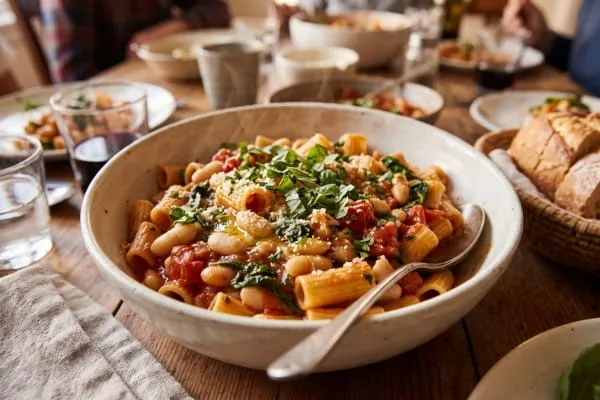
Meal 2: Tomato and white bean pasta
Time: about 15–20 minutes. Serves: 4
Ingredients:
250 g (9 oz) pasta; use 350–400 g for four adults
1 can (400 g / 15 oz) chopped tomatoes
1 can (400 g / 15 oz) white beans, drained and rinsed
1–2 garlic cloves, minced, or ½ teaspoon garlic powder
1 tablespoon olive oil
1 teaspoon dried oregano
Black pepper to taste
Optional: a handful of frozen spinach
Instructions:
Boil the water in a kettle first to save several minutes. Pour it into a pot, return it to a boil, and cook the pasta according to the package.
While the pasta cooks, warm the olive oil in a pan and cook the garlic for 30 seconds.
Add the tomatoes, oregano, and black pepper, and simmer for about 5 minutes.
Stir in the white beans, and the spinach if using, and heat through.
Drain the pasta and toss it with the sauce.
Meal 3: 10-minute tuna and bean wraps
Time: about 10 minutes. Serves: 4
Ingredients:
4 whole-wheat tortillas
1 can (about 145 g / 5 oz) light tuna, drained
½ can (400 g / 15 oz) white beans, drained and rinsed
2–3 tablespoons plain Greek yogurt
A squeeze of lemon juice
Chopped cucumber or lettuce
Instructions:
Mash the beans with a fork. Mash them well if you're serving toddlers.
Mix in the tuna, yogurt, and lemon juice.
Add the chopped vegetables.
Spoon the mixture onto the tortillas and roll them up.
Serve with fruit, vegetable sticks, or a simple side salad.
Meal prep tip: Don't store leftovers in the opened can. Transfer the extra beans and any leftover filling to a lidded container, refrigerate, and use within 3–4 days.[1][9]
Meal 4: Black bean and corn rice bowls
Time: about 10–15 minutes with precooked rice. Serves: 4
Ingredients:
3 cups (about 500 g) cooked rice: thawed from frozen, cooked within the past 24 hours, or two 250 g ready-to-heat pouches
1 can (400 g / 15 oz) black beans, drained and rinsed
1 cup (about 150 g) canned or frozen corn
½ teaspoon ground cumin
Salsa
Lime juice (optional)
Instructions:
Heat the rice until steaming hot throughout. Leftover rice should be reheated only once.[1]
Warm the black beans and corn with the cumin.
Divide the rice between bowls.
Add the bean and corn mixture.
Finish with salsa and a squeeze of lime.
Make it more filling: Add grated cheese, sliced avocado, or a fried egg.
A simple 30-minute easy family meal prep routine
You don't need to spend your Sunday cooking to make weekday meals easier. Try this short routine once or twice a week.
Step 1: Check what you already have (5 minutes)
Before shopping, look through your pantry, fridge, and freezer and note what you need to use soon. If you already have rice, canned beans, and tomatoes, you may only need vegetables, fruit, and a protein.
Step 2: Choose three flexible meals (5 minutes)
Instead of planning seven different dinners, choose three that share ingredients. For example:
Tomato and white bean pasta
Chickpea couscous bowls
Black bean and rice bowls
All three use olive oil, garlic, canned beans, and basic seasonings.
Step 3: Prepare one or two ingredients (15 minutes)
Depending on your schedule, you could:
Wash and chop vegetables
Cook a batch of rice or quinoa, then freeze it in portions
Make a simple dressing
Portion seeds or dried fruit for snacks
You don't have to do everything. Even one prepared ingredient makes a busy evening easier.
Refrigerate cooked food within two hours, or within one hour if your kitchen is above 32°C (90°F). Cooked rice should go into the fridge within an hour. Reheat leftovers until steaming hot all the way through: 74°C (165°F) on a food thermometer.[1][2]
Step 4: Make a quick shopping list (5 minutes)
Write down only what you need to complete your meals. A short, focused list cuts impulse buys and ingredients that go unused.
What to keep in your fridge and freezer
Pantry staples are the foundation, but a few fresh and frozen foods make them far more versatile.
In the refrigerator:
Eggs
Plain yogurt
Cheese
Carrots
Cucumber
Salad greens
Lemons
In the freezer:
Frozen peas
Frozen spinach
Mixed vegetables
Berries
Cooked rice or quinoa in individual portions
Bread or tortillas
Frozen vegetables need almost no preparation and go straight into most cooked dishes. You don't need to buy everything at once. Start with what your family already eats and add the rest gradually.
How to stock your pantry on a budget
A practical pantry doesn't have to be expensive. The key is choosing ingredients that do several jobs.
Buy versatile ingredients. A bag of rice becomes a side dish, a rice bowl, or a wrap filling. A can of beans goes into salads, soups, pasta, and tacos.
Compare the cost per serving. Larger packages are better value only if you'll use them before they lose quality.
Choose store brands where it makes no difference. Oats, rice, canned tomatoes, and beans rarely need premium branding.
Use frozen produce. It cuts waste when fresh produce spoils before you get to it.
Rotate your stock, and check your cans. Put older items at the front and use them first. For best quality, use high-acid canned foods such as tomatoes within 12–18 months, and low-acid foods such as beans, corn, and fish within 2–5 years.[9] Throw away cans that are bulging, leaking, rusted, or deeply dented. A shallow dent with no other damage is usually fine.[1][9] Store cans somewhere cool and dry, not above the stove or under the sink.[9]
Don't buy ingredients just because they're on a list. If your family won't eat lentils or never touches couscous, choose alternatives you'll actually use.
The best pantry reflects your household's tastes, budget, and cooking habits.
Your Printable Pantry Restocking Checklist
Check off these essential ingredients to streamline your 15-minute family meal prep.
1. Grains & Sustained Energy Carbohydrates
Rolled Oats (Porridge Oats): High-fiber (fibre) grains perfect for quick breakfasts or baking.
White or Brown Rice: Budget-friendly pantry staples for hearty meal bases.
Durum Wheat Pasta: A versatile, quick-cooking family favorite (favourite).
Couscous: The ultimate rapid-prep grain that’s ready in 5 minutes.
Quinoa: A nutrient-dense, plant-based protein alternative to rice.
Shelf-Stable Tortillas (Wraps): Perfect for instant quesadillas, burritos, or thin-crust pizzas.
Whole-Grain Crackers: Quick, ready-to-eat options for balanced snacks and soup pairings.
2. Protein-Rich Staples for Satiety
Canned Beans (Tinned Pulses): Black, kidney, or chickpeas for instant plant-based protein and fiber (fibre).
Dry Red or Green Lentils: Fast-cooking legumes that don't require overnight soaking.
Canned Tuna, Salmon, or Sardines: Convenient, high-density protein packed with healthy omega-3 fatty acids.
Peanut Butter (or Seed Butter): Shelf-stable, calorie-dense healthy fats for sauces and snacks.
Chia, Flax, Pumpkin (Pepitas), or Sunflower Seeds: Quick micronutrient boosters to sprinkle on meals.
3. Canned & Shelf-Stable Nutrition
Canned Diced Tomatoes: The essential acidic base for quick pasta sauces, stews, and soups.
Canned Sweetcorn (Tinned Corn): Adds natural sweetness, moisture, and dietary fiber (fibre) to family dishes.
Shelf-Stable Milk (UHT or Powdered Plant-Based): Ensures nutritional consistency and calcium without fridge stress.
Low-Sodium Broth (Stock): A flavorful (flavourful) base for rehydrating grains and making fast soups.
Dried Fruits (Raisins, Dates, or Apricots): Natural, fast-acting energy sources for sweetening dishes without added sugar.
4. Cooking Essentials & Flavor (Flavour) Boosters
Extra Virgin Olive Oil: A healthy, heart-safe cooking fat to support daily nutrition.
Apple Cider Vinegar: A long-term acidifier to brighten flavors (flavours) and support digestive wellness.
Garlic Powder: A high-impact, convenient seasoning to elevate any basic dish.
Smoked Paprika: Instantly turns simple pantry items into rich, palatable family meals.
Ground Cumin: An essential, aromatic spice for quick Mexican or Mediterranean dishes.
Dried Oregano: A versatile culinary herb to boost the aroma of your weekly meal prep.
You don't need to stock everything at once. Start with five to ten pantry staples that fit your budget, then build your inventory as you discover which easy 15-minute meals your family loves most.
Final thoughts
Getting 15-minute family meals on the table is much easier when you aren't starting from zero with an organized pantry.
A few cans of beans, a bag of pasta, some rice, and a handful of seasonings can become dozens of different meals. Add frozen vegetables, eggs, yogurt, or another quick protein, and the options multiply.
Start small. Choose the staples your family enjoys, keep a short restocking list, and learn two or three meals you can make without a recipe.
The real secret to 15-minute family meals isn't cooking faster. It's being ready before hunger strikes.
Disclaimer: This article is for general information only. It is not a substitute for advice from your doctor, pediatrician, registered dietitian, or allergist. Food-safety guidance differs between countries; where it does, this article follows the more cautious rule. If anyone in your household is under one year old, pregnant, has a food allergy, or has a medical condition that affects what they eat, check with their healthcare provider before changing their diet.